
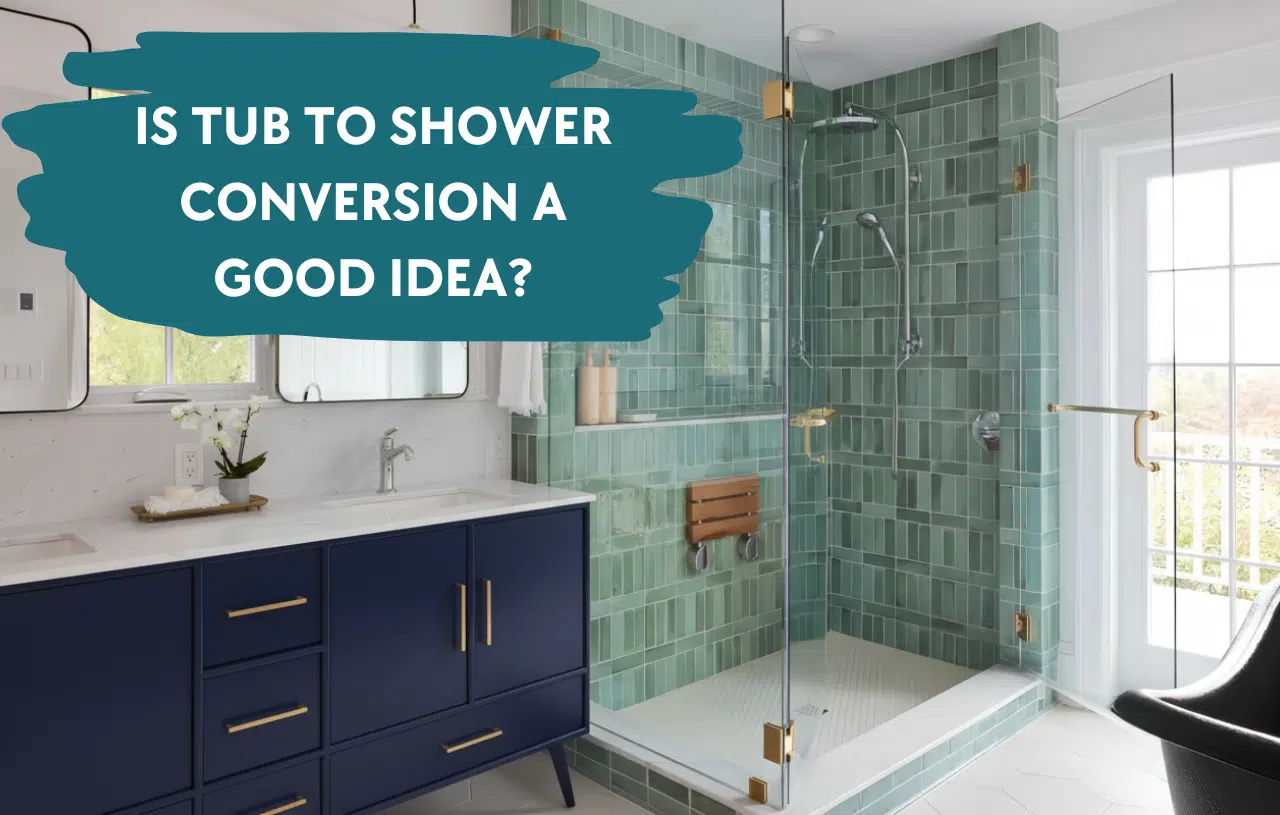
If you barely use your bathtub, you’ve probably wondered whether swapping it for a walk-in shower makes sense.
For a lot of homeowners, it does. A tub-to-shower conversion can make a bathroom easier to use, easier to clean, and better suited to how your mobility changes over time. It can also make an older bathroom look cleaner and more open, without a full renovation.
But pulling out a bathtub isn’t automatically right for every home. Your household, your layout, your accessibility needs, your budget, and your resale plans all factor in.
Here’s what to think through before you convert.
Is a tub-to-shower conversion a good idea?
In most cases, yes, especially if the tub’s barely used.
The biggest reasons homeowners make the switch:
- Easier entry and exit
- More usable shower space
- Better accessibility
- Easier cleaning and maintenance
- A more modern look
- Room for seating, grab bars, or a handheld showerhead
- Making use of space that was going to waste
The real question is whether your household still needs a bathtub.
Young kids in the house, regular baths, or this being your only tub, any of those and keeping one probably makes sense. Otherwise, a well-designed walk-in shower usually wins on daily usefulness.
The benefits of replacing a tub with a shower
Easier entry and exit
A traditional tub means stepping over a high side wall every time you get in or out.
If your balance isn’t what it used to be, or you’re thinking ahead to aging in place, that step gets harder every year. A low-threshold shower makes entry a lot easier. A properly built curbless shower removes the barrier almost entirely.
More usable shower space
A bathtub takes up a lot of floor space, but the actual room to stand and move inside it is narrow.
Pull the tub, and that same footprint becomes usable shower space, built around how you actually bathe. Small bathrooms feel this the most.
Better accessibility options
A conversion opens the door to:
- Grab bars
- Built-in seating
- Handheld showerheads
- Low-threshold entrances
- Slip-resistant surfaces
- Accessible controls
- Built-in storage
These matter for aging in place, for temporary injuries, or just for making the shower more comfortable for everyone using it.
Easier cleaning and maintenance
Old tub surrounds tend to have aging grout, worn caulk, tight corners, surfaces that never quite come clean.
A new shower can be built for maintenance from day one: larger-format tile, low-maintenance wall systems, better storage, transitions that don’t trap grime.
A cleaner, more modern look
Pulling out a dated tub and surround changes the whole feel of the room.
New tile, glass, fixtures, niches, and hardware give the bathroom a cleaner, more intentional look, without touching every other part of the space.
When a tub-to-shower conversion may not be right
It’s not the right call for every household.
Your household may still need a tub
Once it’s gone, it’s gone. That’s the simple part.
Families with babies or young kids often find a tub more practical day to day. If your home has other bathrooms, this is easy to work around, just keep a tub somewhere else in the house.
Demolition may uncover hidden problems
Pulling an old tub or surround can expose things you couldn’t see before.
Depending on the bathroom’s age and condition, that might mean:
- Plumbing issues
- Water damage
- Subfloor problems
- Wall damage
- Old, failed waterproofing
- Framing issues
None of that means don’t do it. It’s exactly why a contractor should actually evaluate your space instead of treating every conversion like a copy-paste job.
Custom features add time and complexity
A basic swap is a much smaller job than a fully custom shower.
Extensive tile, plumbing relocation, frameless glass, benches, niches, specialty fixtures, or a curbless entry, each one adds complexity and time to the project.
Will removing a bathtub hurt resale value?
Not necessarily.
If your home has more than one bathroom and another tub stays put, swapping one tub for a nice walk-in shower usually isn’t a resale problem. Removing the only tub in the house is a different story.
The real question is who’s likely to buy the house eventually.
Families with very young kids often want a bathtub available. Buyers who care about accessibility may see a well-designed walk-in shower as a plus.
If resale matters to you, a solid middle ground is keeping at least one tub somewhere in the home and converting the bathroom you actually use every day. You get the daily convenience of a shower without cutting bathtub access from the house entirely.
How much does a tub-to-shower conversion cost?
There’s no single number that applies across the board.
Cost depends heavily on what’s coming out and what’s going in. Major factors:
- Existing tub and surround
- Demolition requirements
- Condition of the walls and subfloor
- Plumbing changes
- Shower base or pan
- Acrylic or solid-surface walls versus custom tile
- Waterproofing requirements
- Shower fixtures
- Glass enclosure
- Built-in seating
- Niches and shelving
- Grab bars and accessibility features
- Permits, when they apply
A basic conversion that keeps plumbing roughly where it is costs less than a custom tiled shower with plumbing relocation, new glass, seating, niches, and accessibility upgrades.
That’s why a project-specific estimate beats any national average you’ll find online.
We can evaluate your bathroom, walk through shower options that fit your space, and give you a real number based on your project, not a generic range.
How long does a tub-to-shower conversion take?
Depends on what you’re installing.
A basic conversion system can go in fast. Custom projects with tile, plumbing changes, structural prep, waterproofing, or glass take longer.
Before work starts, your contractor should tell you:
- What’s coming out
- What prep is required
- Whether plumbing needs to move
- What shower system is going in
- When you can actually use it
- What could affect the schedule
At Cincinnati Bathroom Remodel, most basic tub-to-shower conversions finish in one to two days, depending on the project’s conditions and the features you choose.
Is a tub-to-shower conversion better for accessibility?
Often, yes.
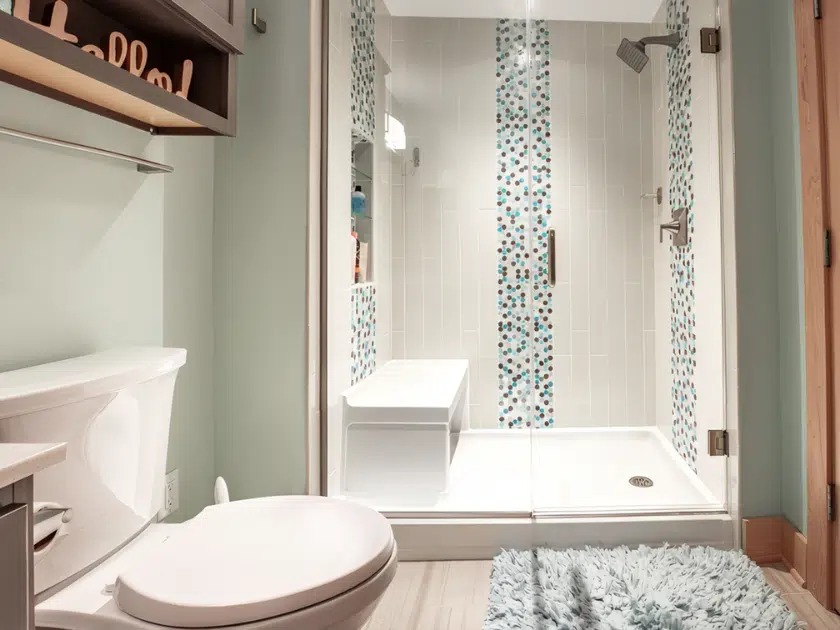
That high side of a traditional tub becomes one of the hardest parts of a bathroom to navigate as mobility changes. A low-threshold shower removes that obstacle, and opens the door to other accessibility upgrades.
Depending on your bathroom and your needs, that might include:
Grab bars
Placed right, they give you real support entering, exiting, or moving around the shower.
Shower seating
Built-in or standalone seating makes showering easier if standing for a while is hard.
A handheld showerhead
Makes bathing easier whether you’re standing or seated.
Slip-resistant surfaces
Flooring and shower surfaces chosen for traction and safer footing.
A low or curbless entrance
A lower entrance means easier access, plain and simple.
If mobility limitations are significant, the shower should be planned around the specific person using it, not just a handful of generic “accessible” add-ons.
Does Medicare cover a tub-to-shower conversion?
Don’t assume Original Medicare will cover a permanent bathroom conversion. In most cases, it won’t.
Original Medicare mainly covers medical services and durable medical equipment, not general home renovations. Medicare Advantage plans can offer more, but benefits vary a lot by plan. Contact your specific plan before assuming anything is covered.
In other words: don’t schedule a project banking on Medicare reimbursement.
What about Medicare Advantage?
Medicare Advantage plans come from private insurers and sometimes include benefits Original Medicare doesn’t offer. What’s covered, who qualifies, and what approval is needed all depends on your specific plan.
If you have Medicare Advantage, call your plan directly and ask about home-safety or home-modification benefits.
Can VA benefits help pay for an accessible shower?
For some eligible Veterans, yes.
The VA’s Home Improvements and Structural Alterations (HISA) benefit can help cover medically necessary modifications to a Veteran’s or service member’s primary residence. The VA specifically calls out access to essential bathroom facilities, including roll-in showers, as an eligible improvement.
Separately, the VA’s Specially Adapted Housing (SAH) and Special Home Adaptation (SHA) programs offer grants for qualifying Veterans with certain service-connected disabilities to adapt a home for greater independence. Eligibility requirements apply.
If you’re planning to use a VA benefit, confirm eligibility and get any required approvals before construction starts, not after.
Can Ohio Medicaid waiver programs cover bathroom modifications?
Some Ohio Medicaid home- and community-based waiver programs cover qualifying modifications for eligible participants.
Ohio’s current rules define covered modifications as adaptations needed for health, safety, or independence, and specifically list grab bars, widened doorways, and bathroom modifications as examples. The modification usually needs authorization through your individual service plan.
Ohio has multiple waiver programs that include home modifications, but eligibility differs a lot by program.
If you or a family member is on Medicaid waiver services, talk to your case manager or program administrator before work begins.
Coverage through Medicare, Medicaid, the VA, or insurance is never something a remodeling contractor should promise on their behalf.
Walk-in shower or walk-in tub?
Depends what you need.
A walk-in shower fits you better if you want:
- More open space
- Easier entry
- A faster daily shower
- Flexible seating options
- A modern look
- Easier cleaning
A walk-in tub fits you better if you:
- Genuinely prefer bathing over showering
- Want a seated bathing experience
- Want features specific to certain walk-in tub designs
One thing worth knowing about walk-in tubs: you generally have to enter before filling it, and stay inside while it drains before you can open the door.
Neither one wins across the board. It comes down to mobility, bathing preference, your bathroom’s dimensions, and what you’ll need down the road.
Should you keep one bathtub in the house?
If you’ve got multiple bathrooms, keeping one traditional tub is a smart move.
Convert the bathroom you use most, and keep a tub elsewhere for:
- Kids
- Guests
- Future homeowners
- Anyone who prefers bathing
If the bathroom you’re considering has your home’s only tub, think hard about how long you’re staying and who’s likely to use it.
That doesn’t mean keep the tub automatically. It just means give the decision real thought.
Questions to ask before converting your tub
- Do we actually use this bathtub?
- Is stepping over it getting harder?
- Would a bigger shower improve our daily routine?
- Do we need accessibility features now, or will we soon?
- Is there another tub elsewhere in the house?
- Tile or a lower-maintenance wall system?
- Would seating or grab bars help?
- Are we good with the upkeep our chosen materials need?
- How long do we plan to stay in this house?
- What does the contractor’s warranty actually cover?
Those answers tell you more than any list of trending bathroom features ever will.
What to ask a tub-to-shower contractor
The tile you see is only part of the job. Before hiring anyone, ask about:
- Bathroom and shower experience specifically
- Licensing and insurance
- Waterproofing methods
- Plumbing work
- Installation process
- Project timeline
- Written scope of work
- What happens if they find hidden damage
- Cleanup
- Warranty coverage
A good contractor can explain what’s happening behind the tile, not just hand you samples.
At Cincinnati Bathroom Remodel, every project includes a 1-year warranty on materials and installation and a 2-year warranty on plumbing and electrical systems, subject to your project’s terms.
So, is a tub-to-shower conversion worth it?
For a lot of homeowners, yes.
If your tub barely gets used and you’d get real value from easier entry, more space, simpler upkeep, or better accessibility, converting it can make your bathroom genuinely better to live with.
Think harder about it if you’re removing your only tub, or if bathing is still important to your household.
Start with how you actually use the bathroom, not with what’s trending. If a walk-in shower fits your routine now, and how you expect to live in your home going forward, a tub-to-shower conversion is a practical upgrade that lasts.
We help homeowners across Greater Cincinnati replace outdated bathtubs with showers built around comfort, accessibility, maintenance, and style.
More than 10 years of experience. Locally owned, veteran-owned. We’ll evaluate your bathroom and help you figure out what actually makes sense for your space.
Let's plan a shower that fits your space and routine.
We'll evaluate your bathroom, answer your questions, and give you a clear project-specific estimate.
Official program resources
- Medicare: What’s not covered?
- Medicare: Compare Original Medicare and Medicare Advantage
- U.S. Department of Veterans Affairs: HISA benefits
- U.S. Department of Veterans Affairs: Adapted housing grants
- Ohio Administrative Code: Medicaid home modifications
Benefit availability and eligibility can change. Confirm current requirements with the relevant program or plan before beginning work.